
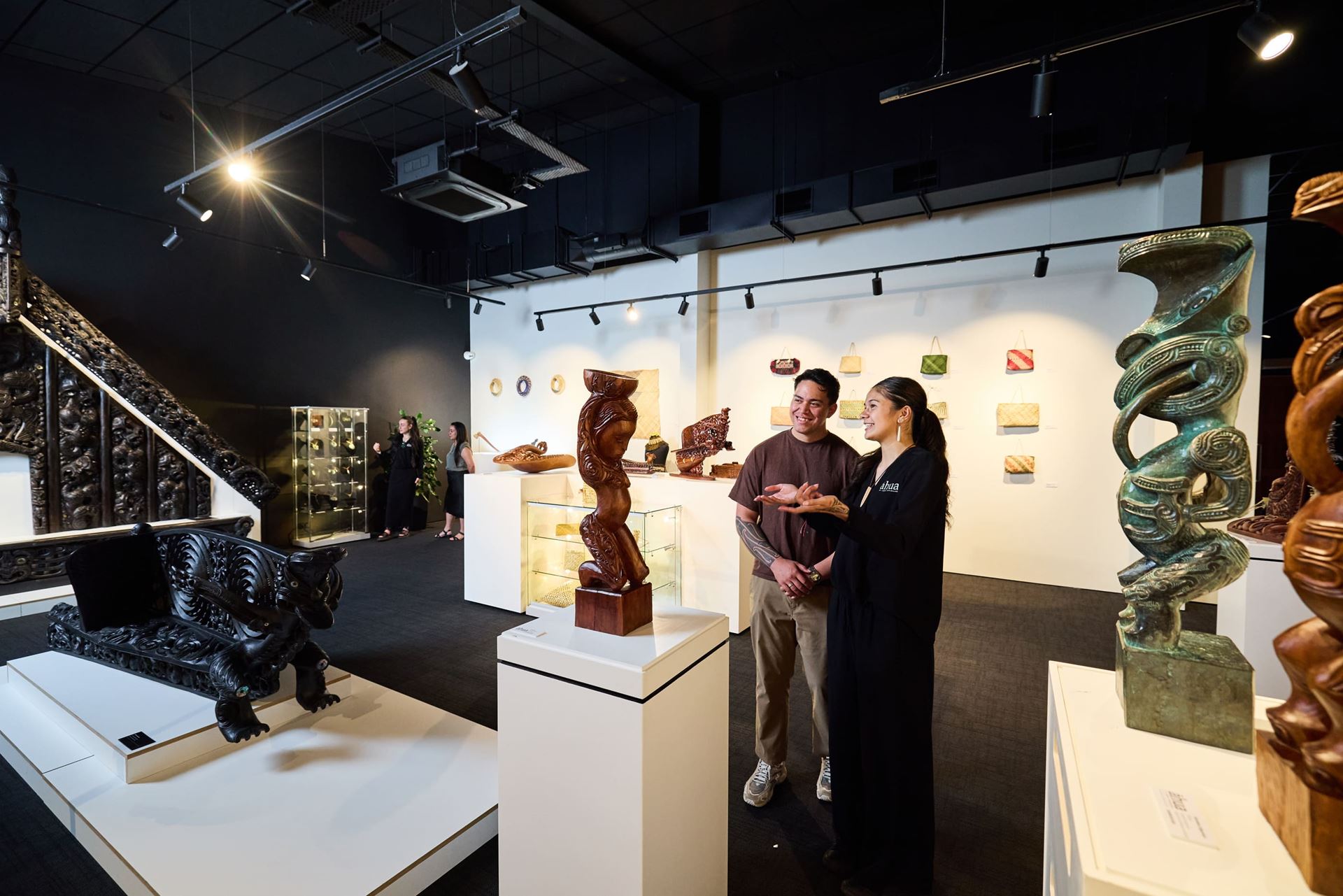
Āhua Gallery
Select Subcategory
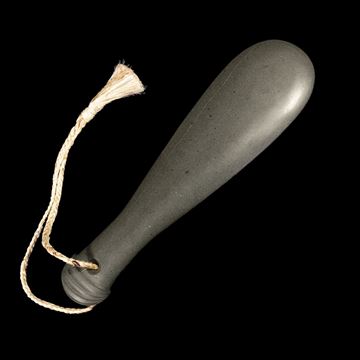
Patu Onewa - 6721PD
Patu (meaning to strike or hit) were typically fashioned from native hardwood, whalebone or stone, including our highly valued pounamu (greenstone). Patu were often sharp at their forward edge and were used with thrusting, jabbing and swinging blows.
Māori weapons are notable for their fine sculptural form and were designed for close hand-to-hand combat. No other stone-age war implements surpassed them in deadly effectiveness.
Material: Onewa (NZ Greywacke)
Measurements: 380mm x 100mm
$2,190.00
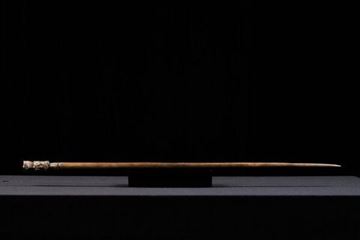
Pāpaka (ed. 2/12) - 4080FD
Pāpaka (crab catching stick) originated in Hawaiki (the original homeland of Māori). Rēhua (the god of fish) handed a pāpaka to a rangatira (chief) before his journey to Aotearoa. This pāpaka is part of a limited edition of 12 bronze casts from an original wood carving by Kawana Waititi. The original will remain part of the New Zealand Māori Arts and Crafts Institute legacy collection.
$3,900.00
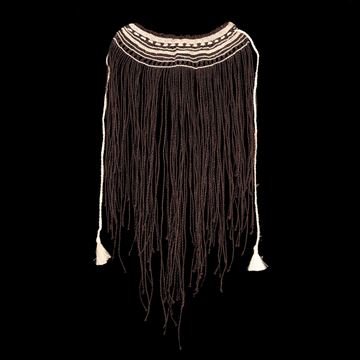
Neck Piece - 6800AE
Hei Piu (neck piece) are contemporary fashion statements utilising Māori tradition
Material: Muka
Measurements: 180mm x 590mm
$590.00
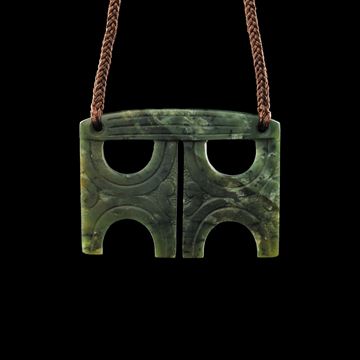
Moko Kauae - 6185KH
Traditionally women who acquired moko kauae (female chin tattoos) received them based on their mana, established through their whakapapa. They were nominated by the hapū to ensure there was a woman of mana to represent them on the marae.
Material: Pounamu (Kawakawa)
Measurements: 50mm x 67mm x 7mm
$1,200.00